
The Descent Of Malaise
A cataclysmic lack of HarmonyThis flow follows a divided woman whose dissatisfaction deepens into isolation and an encounter with Death.
increasing Bearing strength in each event
 decreasing
Bearing strength in each eventdecreasingVitriolic Heart

Vitriolic Heart
The woman begins from an inner bitterness that has become part of her identity. Her apparent harshness is not presented as simple cruelty but as the residue of prolonged dissatisfaction.
Defensive Name
The unusual self-description suggests that language itself has become armor. She uses severity to keep the surrounding world from defining her first.
Social Disfit
Her refusal to fit ordinary expectations creates the first distance between her and everyone around her.
Obfuscated Judgment
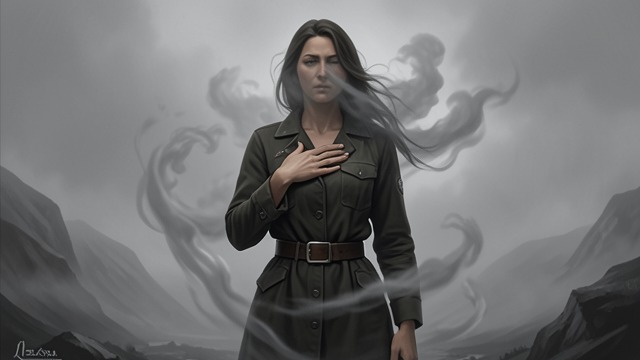
Obfuscated Judgment
A pervasive fog clouds the woman's judgment, dividing mind from soul. She cannot make the two parts cooperate, so every decision feels both automatic and morally incomplete.
Divided Self
The split between thought and feeling turns ordinary action into a ritual without conviction. Even a perfunctory response seems inadequate beside the larger dissatisfaction consuming her.
Growing Instability
The conflict remains internal, but its effects become social. The woman appears anomalous because her inward contradiction prevents stable participation in the world.
The Abyss

The Abyss
After refusing the requests imposed on her, the woman finds herself metaphorically drowning. The abyss expands beyond any previous estimate, suggesting that resistance has exposed rather than removed her despair.
Refusal And Cost
Her noncompliance preserves a fragment of autonomy, yet it also cuts her off from available support. Freedom arrives without security and therefore feels like descent.
Unheard Utterance
No living creature can hear her inaudible speech. Her isolation becomes most severe when the need for recognition survives but language can no longer reach another person.
Phosphene Vision
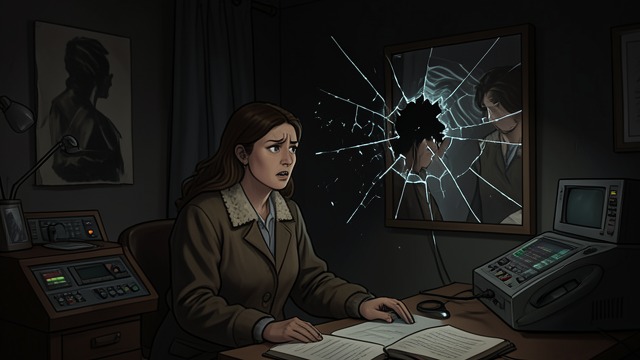
Phosphene Vision
The woman sees flashes within darkness rather than a reliable path forward. These visions imply that consciousness is still active, but its activity no longer guarantees orientation.
Fragmented Life
She stares at a life that seems broken into disconnected pieces. The clock measures time without providing progress, turning each day into a sentence rather than an opportunity.
Escape Impulse
The desire for escape grows as ordinary time becomes punitive. Her movement through space and time is ultimately directed toward an unavoidable destination.
Ultimate Destination
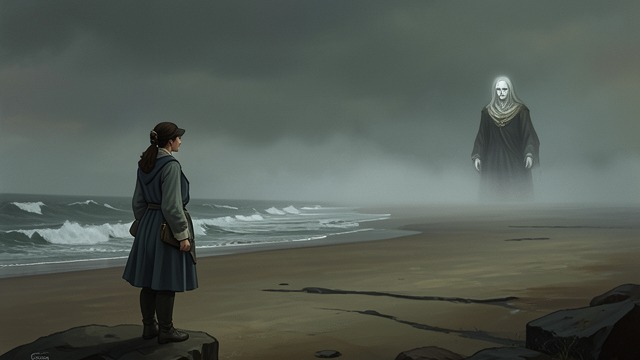
Ultimate Destination
The poem concludes by naming Death as the destination toward which the woman's exhausted consciousness has been traveling. The blunt final word strips away the protective abstraction surrounding her decline.
End Of Metaphor
Earlier images of fog, oceans, clocks, and abysses converge here. Their imaginative richness cannot prevent the final recognition of mortality.
Unresolved Despair
The conclusion offers neither cure nor reconciliation. Its force lies in showing how unaddressed malaise can make Death appear not as an event but as the logic of accumulated isolation.
early in Malaise
after her withdrawal from others
at the middle of the poem
during prolonged solitude
closing lines
